

Table of Contents
- Why Low-Acid Coffee Matters for Early Mornings
- How to Choose Low-Acid Coffee
- Cold Brew vs. Low-Acid Coffee
- Best Coffee for Early Morning Fishing
- How to Keep Coffee Warm on a Fishing Trip
- Acidity vs. Acid Reflux: What Actually Matters
- Frequently Asked Questions
Last Updated: November 2, 2026
This article is general information, not medical advice. If you have frequent or severe heartburn, talk with your doctor.
Why Low-Acid Coffee Matters for Early Mornings
Early mornings on the water demand clarity and alertness. But if regular coffee doesn't sit well with you, it can feel like you're choosing between comfort and focus. That's why many people look for a smoother, lower-acid cup before a long day of fishing.
Coffee acidity refers to chemical compounds in the beans that create sharp, bright flavors. Acid reflux is a digestive reaction where stomach acid backs up into your esophagus. A lower-acid cup may feel gentler for some people, but it won't prevent reflux, and caffeine itself can be a trigger.
The main levers you control are bean selection, roast level, and brewing method.
How to Choose Low-Acid Coffee
The roasting process plays a larger role than most people realize. Darker roasts break down more chlorogenic acid, one of the compounds behind coffee's sharp, bright edge, than light roasts do. In general, darker roasts taste less acidic.

The Swiss Water decaffeination process removes caffeine using water rather than chemical solvents, which makes it a common choice for anglers who are cutting back on caffeine.
Roast Level and Acidity
Medium and dark roasts generally taste less acidic than light roasts. A medium roast strikes a balance: you keep some origin flavor while getting a smoother cup than a light roast.
French and dark roasts tend to produce smoother, fuller-bodied cups that taste less acidic. Reel Good Coffee's Barracuda Bold French Roast ($24.99) delivers a deep, full-bodied flavor with a rich finish.

Processing Method: Swiss Water Decaf
The Swiss Water Process removes caffeine while preserving flavor. It uses only water to extract caffeine molecules.
Reel Good Coffee's Reel Relaxed Peruvian Decaf ($24.99) uses this process, delivering a smooth, satisfying cup without the buzz.
Cold Brew vs. Low-Acid Coffee
Cold brew and low-acid coffee solve different problems. Cold brew is made by steeping grounds in cold water for 12-24 hours, which leaves behind many acidic compounds, resulting in a smoother, less acidic-tasting cup than hot-brewed coffee.
Cold brew isn't always the best choice for early morning fishing. You need warmth, the physical heat of a mug in your hands, the steam rising into cold air, that signals your body to wake up. Cold brew won't provide that.
A smoother hot coffee, such as a darker roast brewed with a paper filter, gives you a gentler-tasting cup along with the warmth and ritual that early mornings demand.
Best Coffee for Early Morning Fishing
Finding the right coffee for early mornings on the water means matching the roast and flavor profile to your specific needs. Some mornings demand a bright first cup before a long day. Other mornings call for smoothness and comfort. Reel Good Coffee offers four distinct options, each built for different fishing scenarios.
Blast Fishing: A Bright First Cup Before Dawn
When the bite window opens at first light and you need to be sharp from the moment you cast, Blast Fishing ($24.99) is your answer. This medium roast house breakfast blend is made with robusta, and it's smooth and bright, built for the first cup of the day.
It's light enough to drink black but versatile enough to pair with cream and sugar if that's your preference. It's the blend for the ride to the ramp, exactly what you want when conditions are prime and the fish are feeding.
Best for: Pre-dawn launches, first cup of the day, coffee drinkers who prefer smooth over bold.
Angler's Joe: Versatile All-Day Option
Not every fishing trip follows the same rhythm. Some days you're out for 12 hours. Some days you're making multiple trips. Angler's Joe ($24.99) is the everyday coffee for dedicated anglers, a 6-bean blend that layers flavor into every cup without demanding anything special from your brewing method or palate.
This dark, multi-origin house blend works equally well in a simple drip brewer, a French press on the boat, or even an AeroPress if you're minimalist about gear. It's satisfying enough to stand on its own, smooth enough to pair with cream, and consistent enough that you'll get the same reliable cup whether you're brewing at the dock or at the cabin.
Best for: Everyday drinking, long days on the water, fishing tournaments where you need reliable, consistent coffee across multiple brewing methods.
REEL RELAXED (Peruvian Decaf) →
Reel Relaxed: Smooth Flavor Without the Caffeine
Some early mornings don't require caffeine. Evening fishing trips, or simply mornings where you want the ritual and warmth without the stimulation, call for a different approach. Reel Relaxed Peruvian Decaf ($24.99) uses the Swiss Water Process to remove caffeine while preserving the smooth, satisfying coffee experience.
This medium roast isn't a compromise cup, it's a smooth, satisfying decaf. You get all the warmth and ritual of your morning coffee without the buzz.
Best for: Evening fishing trips, anglers cutting back on caffeine, anyone who wants the coffee experience without the stimulant.
Texas Rig: Bold Warmth for Cold Mornings
When the dock is cold, the fog is thick, and you need coffee that delivers both warmth and boldness, Texas Rig ($24.99) is named for a reason. This dark and medium roast blend hits hard and finishes smooth, exactly like a well-placed cast into heavy cover, with cocoa, caramel and vanilla tones.
Small-batch roasting means every bag arrives at peak freshness. The blend is designed for early mornings when conditions are harsh and you need coffee that doesn't apologize. It's the kind of cup that warms you from the inside out while keeping your mind sharp.
Best for: Early morning launches, heavy cover fishing, cold weather days on the boat, anglers who prefer bold, full-bodied coffee.
How to Keep Coffee Warm on a Fishing Trip
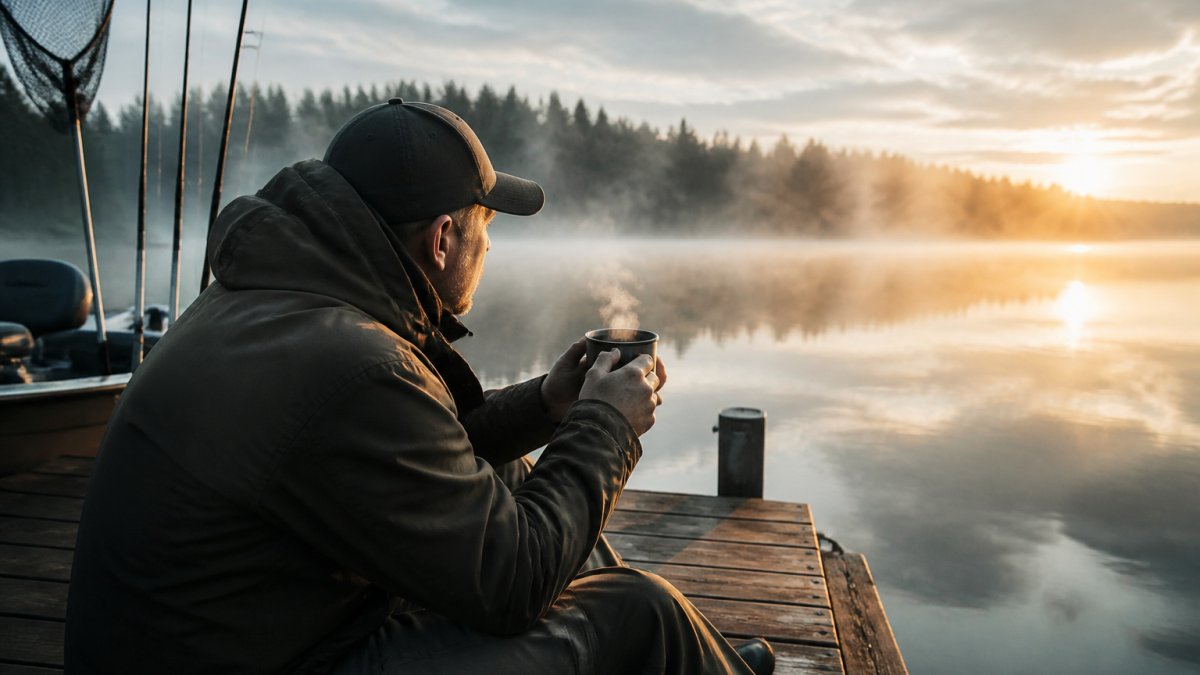
Keeping coffee warm on the water requires more than just a good thermos. The goal is maintaining both temperature and flavor quality across hours on the boat or at the cabin. Start with a quality vacuum-insulated thermos, stainless steel construction with a vacuum seal keeps coffee hot for 8-12 hours without significant temperature loss.
Fill the thermos with hot water 10 minutes before brewing. This preheating step ensures the thermos walls are warm, which dramatically extends how long your coffee stays hot. Pour out the water, add your coffee immediately, and seal it tight. Avoid opening the thermos repeatedly, each time you open it, you release heat and let cool air in.
For early morning fishing trips where you're brewing at home before driving to the ramp, use an insulated travel mug as a secondary container. Pour your coffee from the thermos into the travel mug, then keep the main thermos sealed in your truck or boat bag. This way, you're only opening the travel mug during the ride, preserving the thermos's heat for refills throughout the day.
If you're brewing on-site at the cabin or boat, an AeroPress or French press brews quickly and produces excellent coffee. Both methods produce full-bodied cups that taste better than reheated coffee from a thermos. The ritual of brewing fresh coffee at the cabin also adds to the early morning experience, the smell, the process, the anticipation before the sun rises.
Acidity vs. Acid Reflux: What Actually Matters
Understanding the difference between coffee acidity and acid reflux prevents confusion when choosing low-acid coffee. Coffee acidity is a chemical property, the presence of acids like chlorogenic acid and quinic acid that create bright, sharp flavors. Acid reflux is a digestive condition where stomach acid backs up into the esophagus, causing heartburn or discomfort.
A low-acid coffee addresses the first issue. It contains fewer of those sharp chemical compounds, which means a smoother flavor profile. However, caffeine relaxes the lower esophageal sphincter, so even a low-acid coffee with full caffeine content might still cause problems for some people. That's one reason some people try decaf.
The practical takeaway: if you experience heartburn after coffee, talk with your doctor. Some people experiment with roast level, serving size, decaf, and drinking coffee with food, but what helps varies from person to person, and a coffee swap is not a substitute for medical advice.
The warm cup in your hands at 4 a.m., the taste of good coffee, and the mental shift into focus mode all contribute to a better early morning experience, whether or not the coffee is technically low-acid.
Staying sharp and warm during early mornings on the water is non-negotiable for dedicated anglers. The coffee you choose either supports that goal or works against it. Reel Good Coffee's small-batch, freshly roasted blends are built for this challenge, whether you want a bright first cup with Blast Fishing, everyday versatility with Angler's Joe, decaf smoothness with Reel Relaxed, or bold warmth with Texas Rig. We offer free U.S. shipping on coffee, and we make a donation to a Veterans Service Organization, like K9s For Warriors, for every sale made.

| Coffee | Roast Level | Notes | Best For | Price |
|---|---|---|---|---|
| Blast Fishing | Medium Breakfast Blend | Made with robusta | Pre-dawn launches, first cup | $24.99 |
| Angler's Joe | Dark Blend | Multi-origin, 6 beans | Everyday versatility | $24.99 |
| Reel Relaxed | Medium Decaf | Swiss Water Process decaf | Evening trips, cutting back on caffeine | $24.99 |
| Texas Rig | Dark & Medium | Cocoa, caramel and vanilla tones | Cold mornings, bold flavor | $24.99 |
Frequently Asked Questions
How do I know if low-acid coffee will actually help my acid reflux?
Low-acid coffee may taste smoother, but the acidity in your cup isn't the only factor in reflux; caffeine, serving size, and drinking coffee on an empty stomach can all play a role. If you have GERD or frequent heartburn, talk with your doctor before relying on any coffee to help. Drinking coffee with food and keeping servings small are common starting points to discuss.
What's the difference between low-acid coffee and cold brew?
Cold brew steeps grounds in cool water for 12-24 hours, extracting fewer acidic compounds naturally. Low-acid coffee refers to beans or processing methods (like Swiss Water decaf) that are already lower in sharp compounds before brewing. Cold brew is a brewing method; low-acid coffee is a bean or processing choice. You can make low-acid coffee using either hot or cold methods, and cold brew of any bean type will taste smoother than hot-brewed versions.
Which Reel Good Coffee blend keeps me sharpest for early morning fishing?
Blast Fishing ($24.99) is designed specifically for pre-dawn launches. It's a medium roast breakfast blend made with robusta, with a smooth, bright profile that works black or with cream. If you prefer something bolder, Angler's Joe ($24.99) is our dark 6-bean house blend for long days on the water.
How can I make my morning coffee less acidic without buying special beans?
Add a tiny pinch of baking soda to soften the sour taste, or stir in a small amount of cream to make the cup taste smoother. Brew at lower temperatures if using hot water, or switch to cold brew overnight. Choose a darker roast over light roast, the longer roasting process breaks down acidic compounds. Drink with food rather than on an empty stomach, and avoid brewing too long, which extracts more sharp flavors.