

Table of Contents
- How Long Does Brewed Coffee Last at Room Temperature
- How Long Can Coffee Sit Out With Milk or Cream
- How to Store Brewed Coffee for Maximum Freshness
- How Long Does Cold Brew Last Compared to Hot Brewed Coffee
- Signs Your Coffee Has Gone Stale or Spoiled
- Reheating Old Coffee: Safety and Quality Considerations
- Quick Reference Guide by Coffee Type and Storage
- Frequently Asked Questions
Last Updated: November 2, 2026
How Long Does Brewed Coffee Last at Room Temperature
Brewed coffee last outside doesn't stay fresh long at room temperature. The real question is when it stops tasting good, not just when it becomes unsafe.
The Two-Hour Rule for Food Safety
The FDA recommends not leaving brewed coffee unrefrigerated for more than two hours, black, with milk, or any coffee-based beverage, after which bacterial growth becomes a concern.
But your coffee tastes stale long before it becomes unsafe. Flavor starts degrading within 30 minutes of brewing; by the two-hour mark it's technically safe but flat and bitter.
The two-hour window assumes room temperature around 68-72°F. Above 90°F, cut it in half; outdoors in direct sun, treat coffee as unsafe after one hour.
Flavor and Freshness Degrade Faster Than Safety Allows
Coffee loses its best qualities almost immediately after brewing as aromatic compounds oxidize, turning it bitter and astringent.
Aroma fades within 15 minutes; by 30 minutes the taste turns flat. This is chemistry, not food safety, and happens regardless of bacterial growth.
Most guides focus only on the two-hour safety rule, but great-tasting brewed coffee last outside has a much shorter window, 20 to 30 minutes.
For anglers heading out on early morning trips, this timing matters. At Reel Good Coffee, we recommend brewing fresh right before you leave or investing in a quality thermos to preserve flavor for hours instead of minutes.
How Long Can Coffee Sit Out With Milk or Cream
Adding milk or cream changes the risk profile. Black coffee isn't especially hospitable to rapid bacterial growth, but dairy adds protein, fat, and sugar, exactly what bacteria need, so the guidance is stricter.
The Conservative Rule for Dairy Coffee
Treat coffee with milk or cream as a perishable dairy beverage. The FDA's two-hour rule applies: discard after two hours, cut to one hour above 90°F. Use this for safety, not the flavor window.
Many food-safety practitioners are more conservative and won't drink dairy coffee that has sat out more than an hour, because the margin between "still smells fine" and "bacteria have multiplied" is narrow. Single rule: one hour at room temperature, discard past two.
Why Dairy Coffee Fails Faster Than Black Coffee
Milk and cream spoil independently of the coffee. At room temperature, fat separates and proteins denature, showing up as a grainy texture or slick film, while lactic-acid bacteria convert lactose to acid, so soured dairy coffee smells tangy or vinegary. Reheating reverses none of this.
Flavor declines even faster: most people notice an off taste in dairy coffee within 30 to 45 minutes at room temperature. That is a quality signal, not a safety one, but it's a useful prompt to finish the cup or move it to a cooler.
Temperature Changes the Clock
The two-hour and one-hour limits assume ordinary indoor temperatures. Heat accelerates bacterial growth, so a cup left in direct sun, on a boat deck, or in a hot car can turn risky well inside an hour. Cold slows it: dairy coffee held below 40°F follows refrigeration rules.
Sweeteners, Creamers, and Non-Dairy Additions
Sugar and syrups don't spoil on their own, but they add fermentable sugar that can support microbial growth. Treat sweetened dairy coffee the same as unsweetened, one hour at room temperature.
Powdered and shelf-stable creamers are stable before opening, but once mixed into coffee they follow the same perishable-beverage guidance. Non-dairy milks (oat, almond, soy) aren't automatically safer, many are low-acid, protein-containing liquids that support bacterial growth.
Practical Handling Outdoors
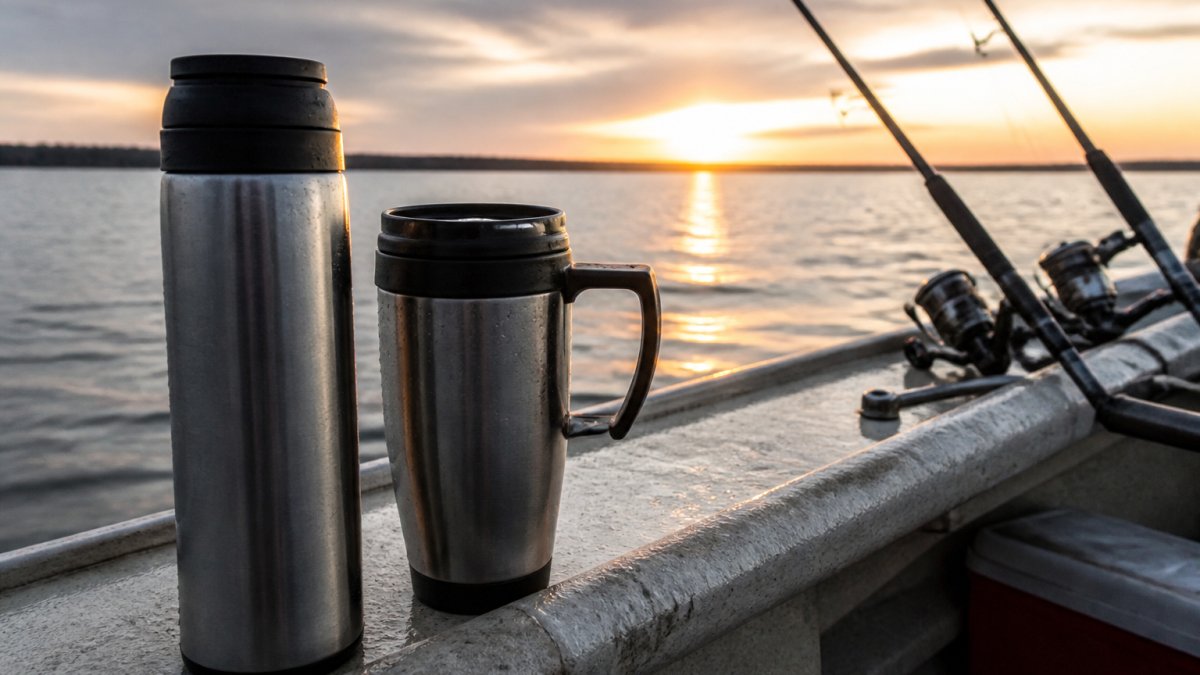
If you take milk or cream and will be outside for hours, keep the dairy separate until you're ready to drink. Carry black coffee in a thermos and add cream from a cooler-stored container at serving time, the coffee stays hot, the dairy stays cold. A quality insulated container holds dairy coffee safely for roughly 4 to 6 hours, but only if pre-chilled or pre-heated and filled full.
How to Store Brewed Coffee for Maximum Freshness
Storage advice for brewed coffee splits into two often-blurred questions: how do I keep it tasting good, and how do I keep it safe? The answers use different mechanisms and time limits, which is why so much online advice contradicts itself.
Two Clocks, Not One
The flavor clock is driven by oxidation and heat: oxygen reacts with aromatic oils and acids, and warmth speeds that up. The safety clock is driven by microbial growth, which depends on temperature, moisture, and nutrients. A sealed thermos slows the flavor clock; a refrigerator slows both. Neither stops either clock.
That distinction matters when you read "coffee lasts two hours" or "coffee lasts four days." The two-hour figure is a food-safety limit at room temperature; the multi-day figure is a quality estimate for refrigerated storage.
Sealed Containers and Thermoses
A sealed container is the single highest-leverage change you can make. Air drives oxidation, so a lid limits the headspace oxygen the coffee reacts with.
A vacuum-insulated thermos seals out air and holds temperature.
Sealed glass or hard plastic works for short-term storage but doesn't insulate. Coffee in one drifts toward room temperature within about an hour, and once warm, oxidation accelerates.
Avoid leaving coffee in an uncovered carafe or pot. Every pour introduces fresh oxygen, and the remainder degrades faster.
Retro Reel Good Coffee Logo - 32oz Insulated Water Bottle →
Refrigerating Brewed Coffee
Refrigeration slows oxidation and inhibits bacterial growth, extending both windows. Brewed coffee in a sealed container in the fridge is generally good for about 3 to 4 days on quality grounds, an estimate, not a safety guarantee.
Refrigerated coffee tastes flatter than fresh. Cold slows oxidation but doesn't stop it, and aromatic compounds keep degrading. Many find it acceptable for iced drinks and unacceptable for reheating, a quality judgment, not a safety one.
Store refrigerated coffee in a sealed container. Coffee is porous and picks up fridge odors, onions, garlic, strong cheeses. A sealed jar or bottle prevents that transfer.
The Assumptions Behind the Numbers
Most published time limits assume the coffee was brewed and handled cleanly, the container was clean, it wasn't already sitting out for hours, and room temperatures were ordinary. Change any assumption and the numbers move.
So the honest answer to "how long does brewed coffee last" is a range with conditions, not a single number. For safety, shorten the room-temperature window and refrigerate or thermos-store sooner. For the best-tasting cup, treat 20 to 30 minutes as the real flavor window and store the rest immediately.
How Long Does Cold Brew Last Compared to Hot Brewed Coffee
Cold brew is different. Cold-water extraction is slower than hot brewing, producing a concentrate that lasts much longer.
Cold brew concentrate stored in the refrigerator lasts 10 to 14 days. Some sources claim up to three weeks, but flavor quality drops significantly after two weeks.
Hot brewed coffee, by comparison, lasts only 3 to 4 days in the refrigerator.
If you're preparing coffee for multiple days outdoors, cold brew concentrate is your answer. Our Frozen Frenzy (Cold Brew Coffee) is a medium roast made for long, slow steeping, so you can make a big batch at home and keep it refrigerated for the week.
Signs Your Coffee Has Gone Stale or Spoiled
Stale coffee and spoiled coffee are different things.
Stale coffee tastes flat, bitter, or astringent and smells less aromatic. It's safe but unpleasant, happening within hours at room temperature or after several days refrigerated.
Spoiled coffee develops an off smell or visible mold. Sour or vinegary refrigerated coffee is spoiled; any mold means throw it out immediately.
Black coffee rarely shows visible spoilage unless mold develops. Coffee with milk or cream is easier to spot, it smells sour or looks curdled.
Smell can catch obvious spoilage, but it isn't a reliable safety test on its own. If something smells off, don't drink it, and if the coffee has sat out past the time limit, discard it even if it smells fine.
| Sign | What It Means | Action |
|---|---|---|
| Flat, bitter taste | Stale (oxidized) | Safe but unpleasant, consider discarding |
| Sour or vinegary smell | Spoiled (bacterial growth) | Do not drink, discard immediately |
| Visible mold | Contaminated | Do not drink, discard immediately |
| Grainy appearance (with cream) | Dairy breakdown | Do not drink, discard immediately |
| Darker color than expected | Normal oxidation | Safe if no other signs present |
Reheating Old Coffee: Safety and Quality Considerations
Reheating won't make spoiled coffee safe, but it won't hurt you if the coffee was stored properly and hasn't gone bad.
Reheating doesn't restore flavor, it makes coffee taste worse. Heat accelerates oxidation, making it even more bitter and stale.
Refrigerated coffee from a few days ago that smells fine can be reheated to 165°F to kill most bacteria, but the taste will be unpleasant, most find it barely drinkable.
Better: don't rely on reheating to extend coffee's life.
Microwave or stovetop both work. Avoid boiling, it worsens bitterness. Heat just until steaming.
Quick Reference Guide by Coffee Type and Storage
| Coffee Type | Room Temperature | Refrigerated | Sealed Container/Thermos |
|---|---|---|---|
| Black coffee | 2 hours (safe); 30 min (good taste) | 3-4 days | 8-12 hours (thermos, kept hot); non-insulated sealed containers follow room-temperature limits |
| Coffee with milk/cream | 1-2 hours (safe); 45 min (good taste) | 2-3 days | 4-6 hours (thermos, pre-heated or pre-chilled and filled full) |
| Sweetened coffee | 2 hours (safe); 30 min (good taste) | 3-4 days | 8-12 hours (thermos) |
| Cold brew concentrate | Not recommended | 10-14 days | N/A (already concentrated) |
| Iced coffee | 2 hours (safe); 1 hour (good taste) | 2-3 days | Keep ice separate; drink within 1 hour of serving |
Keeping coffee fresh on the water or at the cabin takes planning. The two-hour safety window is real, but flavor matters just as much. Invest in a good thermos, brew smaller batches more frequently, or prepare cold brew concentrate at home and dilute it as needed.
At Reel Good Coffee, we craft small-batch blends specifically for anglers who demand incredible taste at every sip, whether you're drinking it fresh at 4 a.m. or hours later from a thermos. Fresh, properly stored coffee makes a difference in how sharp you stay and how much you enjoy your time on the water.
Frequently Asked Questions
Is brewed coffee safe to drink after sitting out overnight?
No. Brewed coffee left at room temperature for more than 2 hours enters the danger zone where bacteria can grow. After 4 hours, the risk increases significantly. Overnight sitting (8+ hours) makes the coffee unsafe to drink. Even if it tastes acceptable, bacterial colonization may have occurred. When in doubt, discard it. For outdoor fishing trips, use a sealed thermos or refrigerate leftovers immediately.
Does adding milk or cream change how long coffee can sit out?
Yes, significantly. Black coffee can sit safely for 2 hours, but coffee with milk or cream should be consumed within 1 hour at room temperature. Dairy products spoil faster than brewed coffee alone and support bacterial growth. If you're adding cream or milk on the water, drink it within an hour or keep it in a sealed, insulated container. Refrigerate any leftovers immediately when you return.
How long does cold brew last compared to hot-brewed coffee?
Cold brew concentrate lasts 10-14 days refrigerated in a sealed container, far longer than hot-brewed coffee. Once diluted with water or milk, drink it within 24 hours if refrigerated. Hot-brewed coffee lasts only 3-4 days refrigerated. The lower temperature and slower oxidation help slow bacterial growth and flavor degradation in cold brew, making it ideal for outdoor enthusiasts who brew ahead for multiple fishing trips.
What's the difference between coffee that tastes stale and coffee that's unsafe to drink?
Stale coffee tastes flat, bitter, or astringent due to oxidation and flavor compounds breaking down, usually after 30 minutes at room temperature or 3-4 days refrigerated. Unsafe coffee may show no obvious taste difference but contains harmful bacteria from unrefrigerated storage beyond 2 hours. You cannot always taste bacterial growth. Prioritize the 2-hour rule for safety, not just flavor. When outdoors, use a thermos to preserve both taste and safety.