

Last Updated: November 2, 2026
Quick Summary
To pack coffee gear for a weekend fishing trip, first pick one brew method, such as an instant pouch, French press, or percolator. Then pack coffee in a sealed bag inside a second zip bag, and keep it in a dry bag separate from tackle and drinkware. Plan about two 6-ounce cups per person per morning, plus one buffer serving each.
- Choose one brew method before packing, not at the dock.
- Store coffee in a sealed bag inside a second zip bag.
- Keep coffee in its own dry bag, separate from tackle and drinkware.
- Plan two 6-ounce cups per person per morning, plus one buffer serving.
- Add about 16 ounces of rinse water per brew session for cleanup.
Table of Contents
- Choosing a Brew Method That Fits Your Trip
- Camping Coffee Gear Checklist for a Weekend on the Water
- How Much Coffee to Bring Camping or Fishing for Two Days
- Coffee Packing Tips for Camping and Boat Trips
- Keeping Coffee Gear Dry and Away From Fish Odors
- How to Make Coffee While Camping or on the Boat
- Packing Your Coffee Kit Before Your Next Trip
- Frequently Asked Questions
Choosing a Brew Method That Fits Your Trip
The first decision on any fishing trip is the brew method. The right choice depends on how much room you have, how long you'll be out, and whether you'll have a stove or just a cooler and a cup. Get that choice right and your pack coffee gear plan falls into place. Scaling your equipment to match the duration of a river fishing trip ensures that your morning ritual remains a highlight rather than a logistical burden.
- Instant coffee: Our Instant Coffee comes in a resealable pouch with 30 servings, so it packs flat.
- French press: Great flavor, but glass or steel parts can break. Pack the press in a padded case.
- Percolator: Brews several cups at once over a stove or fire, which makes it a good fit for a group at camp.
Camping Coffee Gear Checklist for a Weekend on the Water
The checklist below is built for a two-day fishing trip, and it separates the coffee kit from the tackle so neither contaminates the other.

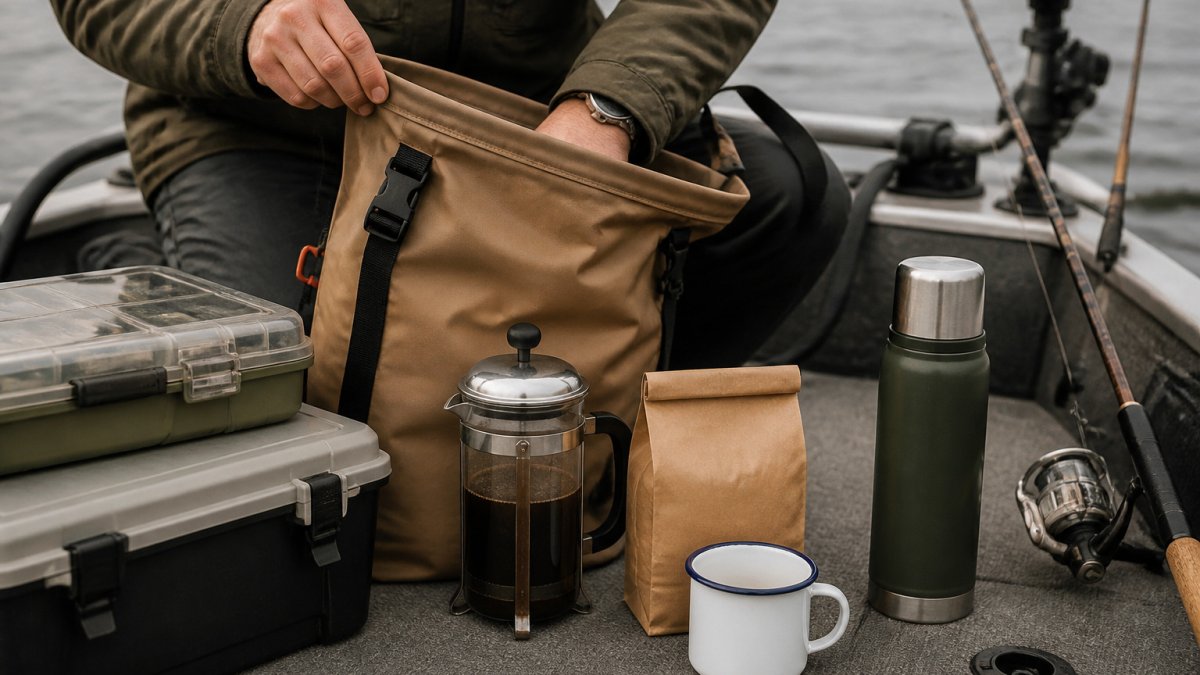
The core coffee kit
- One brew method only (instant pouch, French press, or percolator), pick before you pack, not at the dock
- Coffee measured out in advance, in a sealed bag inside a second zip bag
- Filters, if your method uses them, counted for the number of brews you plan
- Mug: our Enamel Mug - "Reel Good" Fishing Camp Coffee Cup is lightweight and built for camp use
- Insulated bottle for keeping coffee hot on the boat: the Retro Reel Good Coffee Logo - 32oz Insulated Water Bottle is a 32 oz insulated option
- Spoon, stirrer, and a small measuring scoop
- Small sealed container for sugar or creamer
- Biodegradable soap and a small cleanup cloth
- Lighter or matches in a waterproof case, if you'll boil water
The organization layer (what most lists miss)
A labeled two-bag system keeps coffee accessible without exposing it to bait, fish residue, or spray:


-
Dry bag A, coffee only: brew method, coffee, filters, scoop, sugar. Labeled "COFFEE."
-
Dry bag B, drinkware and cleanup: mugs, insulated bottle, cloth, soap. Kept separate so a spilled mug doesn't soak the grounds.
-
Small trash bag: for used filters and grounds. Pack it out; don't rinse grounds over the side near your fishing spot.
Fishing-trip items that interact with the coffee kit
These aren't coffee gear, but they change how you pack it:
- Cooler with a secure lid, the coffee bag rides on top, not inside, so it stays dry
- Rain shell and a dry towel, a wet angler handling a cloth bag is how grounds get soaked
- Headlamp, the 4 a.m. brew happens before sunrise, and a headlamp beats fumbling for a phone
- Waterproof phone pouch or dry box for ID and license, keep documents in their own bag, away from both coffee and bait
- Sun protection (hat, sunscreen, polarized glasses), packed last so it's first out
What to leave home
- A second brew method "just in case", it doubles weight and cleanup
- Loose grounds in an open tin, one splash ruins the trip's coffee
- Glass carafes without a hard case
- Anything that needs electricity unless you've confirmed a power source
Run the list once at home, once at the vehicle, and once at the water. Three checks catch the item you set down and forgot.
How Much Coffee to Bring Camping or Fishing for Two Days
Here is a worked two-day calculation you can scale. The method below separates drinking water (for coffee) from brewing water (for cleanup and rinsing), because most overpackers forget the second number.
The base rule
Plan on two 6-ounce cups per person per morning, plus one buffer serving per person for the trip. That's the drinking estimate. Then add brewing and rinse water on top.
Worked example: two people, two mornings
- Drinkers: 2
- Cups per morning: 2 × 2 = 4 cups
- Mornings: 4 cups × 2 mornings = 8 cups
- Buffer: +1 serving per person = +2 → 10 servings total
- Drinking water: 10 servings × 6 oz = 60 oz (about 1.8 L)
- Brewing and rinse water: add roughly 16 oz per brew session for rinsing the press or percolator and the mugs → 2 sessions × 16 oz = 32 oz
- Total water to carry for coffee: about 92 oz, or roughly 2.7 L
Round up. A 32 oz insulated bottle holds about five 6-ounce cups, so two people over two mornings fit comfortably in one bottle plus a backup.
Quick-reference table
| People | Mornings | Servings (with buffer) | Drinking water | + Rinse water | Total coffee water |
|---|---|---|---|---|---|
| 1 | 2 | 5 | 30 oz | 32 oz | ~62 oz |
| 2 | 2 | 10 | 60 oz | 32 oz | ~92 oz |
| 4 | 2 | 20 | 120 oz | 32 oz | ~152 oz |
| 2 | 3 | 14 | 84 oz | 48 oz | ~132 oz |
Converting servings to grounds or beans
- Instant: one pouch serving per cup, the resealable pouch format makes this the easiest to count.
- Drip or pour-over: about 2 tablespoons of grounds per 6-ounce cup. Ten servings ≈ 20 tablespoons ≈ 1¼ cups of grounds.
- French press: a common ratio is 1:15 coffee to water by weight; for a 32-ounce press that's roughly 2 ounces of coarse grounds.
- Percolator: follow the basket markings; a typical 8-cup perk uses about ½ cup of grounds.
Adjustments for real trips
- Cold mornings: add one serving per person, people drink more when it's 40°F at launch.
- Boat ride home: add one serving per person if you'll be on the water past mid-morning.
- Group brewing: a percolator is more water-efficient per cup than a French press because you're not rinsing between batches.
- Saltwater trips: budget extra rinse water, you'll want to flush the press and mugs with fresh water at day's end.
Coffee Packing Tips for Camping and Boat Trips
Good packing protects both the coffee and the rest of your gear. A few habits make a big difference.
- Store coffee in its original sealed bag, then place that bag inside a second zip bag.
- Keep grounds away from wet tackle. Moisture and fish scent ruin coffee quickly.
- Pack the heaviest items low and near the center of the boat.
- Label containers so you can find the coffee without unpacking everything.
Keeping Coffee Gear Dry and Away From Fish Odors
Fish odor clings to everything. Wipe down mugs and bottles with a dry cloth before storing them.
How to Make Coffee While Camping or on the Boat
Start with clean water and clean equipment. Here is a simple process for each method:
Instant coffee: Heat water to a rolling boil, add one serving to your mug, and stir. Wait about 30 seconds for the powder to fully dissolve.
French press: Add coarse grounds, pour hot water, wait four minutes, then press slowly. Pour right away so the coffee doesn't keep brewing.
Percolator: Fill with water to the marked line, add grounds to the basket, and set over medium heat. Watch the glass knob and pull the pot off the heat once it turns the right color.
Heat sources matter. Use a sealed camp stove on land, and never leave a flame unattended on a boat. Check local fire rules before you light anything at a campsite.
Packing Your Coffee Kit Before Your Next Trip
Lay everything out the night before. Check it against your list, pack the dry bag, and store it near the cooler where it's easy to reach. Keep the bag closed during rain or spray.
Packing this way means your coffee is ready when the alarm goes off at 4 a.m., and that's the best part of an early fishing morning. Reel Good Coffee is made for that early-morning moment on the water.
Frequently Asked Questions
What coffee gear should I bring on a weekend fishing trip?
Bring a brewing method that fits your setup, plus a mug, an insulated bottle, and a small measuring scoop. Reel Good Coffee's Instant Coffee comes in a resealable 30-serving pouch at $24.99, which takes almost no gear: add hot water and stir. Pick the simplest kit you will actually use on the water, since fewer parts mean less to keep dry and less to clean at camp or on the boat.
How much coffee should I pack for a weekend trip?
For a two-day trip, plan about two 6-ounce cups per person per morning, plus one buffer serving per person. That works out to five servings for one angler, or ten for two. A standard cup uses about two tablespoons of ground coffee, so ten servings is roughly 1¼ cups of grounds. Measure out doses at home into labeled, sealed bags to save space, and add the water you need for brewing and rinsing to your drinking water count.
How do you keep coffee gear dry in a boat or fishing pack?
Store coffee and filters in a sealed container or a resealable pouch inside a dry bag, and keep the dry bag separate from wet tackle and bait. Wipe down the mug, press and bottle at the end of each day to remove fish slime and scent. Keep the coffee in a cool, dry spot out of direct sun and spray. Store grounds apart from fishing lures so that fish odors do not transfer into the coffee.
Can you make coffee without electricity while camping?
Yes. A French press, percolator, AeroPress or pour-over cone needs only hot water and no power. Heat water on a camp stove or small fuel burner, then brew at the campsite or on the boat. Use a lid or insulated bottle to keep the brew hot. Always set up stoves on a stable, level surface and never use an open flame or stove inside an enclosed cabin or boat cabin.
Coffee for a Cause: We make a donation to a Veterans Service Organization, like K9s For Warriors, for every sale made.