

Last Updated: October 31, 2026
Quick Summary
Remove coffee smell from lures by washing them with plain unscented dish soap, then soaking them in a baking soda bath of one tablespoon per quart of warm water for 15 to 20 minutes. Rinse thoroughly and air-dry completely for 12 to 24 hours, repeating the soap wash and soda soak once if the coffee smell lingers.
- Rinse lures in cool water for 10 to 15 seconds per lure before washing.
- Wash lures in 90 to 100°F water with a few drops of unscented dish soap.
- Coat hard baits with a paste of three parts baking soda to one part water for 10 minutes.
- Wipe wooden lures with a barely damp cloth instead of soaking them.
- Store cleaned lures in separate zip-top bags to prevent scent transfer.
Table of Contents
- Why Coffee Smell Clings to Lures and Why It Matters
- What You'll Need Before You Start
- Step-by-Step: How to Remove Coffee Smell From Lures
- How to Remove Odor From Soft Plastic Baits
- Cleaning Coffee Residue Off Fishing Lures: Material-Specific Guidance
- Removing Odor vs. Masking It: What Actually Works
- How to Remove Smell From a Tackle Box
- Common Mistakes and How to Avoid Scent Transfer
- Frequently Asked Questions
Why Coffee Smell Clings to Lures and Why It Matters
Coffee smell lingers on lures because roasted-bean oils soak into soft plastics and textured surfaces and do not rinse away with water alone. For a closer look at how coffee oils interact with lures, see our companion article. The scent can mask the profile you paid for and transfer to everything it touches in your box.
What You'll Need Before You Start
Gather everything first so you are not hunting through the boat locker mid-clean.
- Dish soap, a plain, unscented degreaser works best
- Baking soda, one box is plenty for several rounds
- Two plastic tubs or buckets, one for washing, one for rinsing
- Soft-bristle brush, an old toothbrush reaches into hook slots
- Clean towels, microfiber or cotton, lint-free
- Drying rack or mesh, keeps baits off the deck
- Zip-top bags, for storing cleaned lures separately
Skip anything with added fragrance. A scented soap just trades coffee for perfume.
Time estimate: about 30 minutes of hands-on work, plus overnight drying.
Step-by-Step: How to Remove Coffee Smell From Lures
The full process takes four stages: rinse, wash, soak, and dry. Each does a different job, and skipping a stage leaves oil behind. Times below are starting points for soft plastics and hard baits; adjust for wood and painted finishes as noted in the material section.
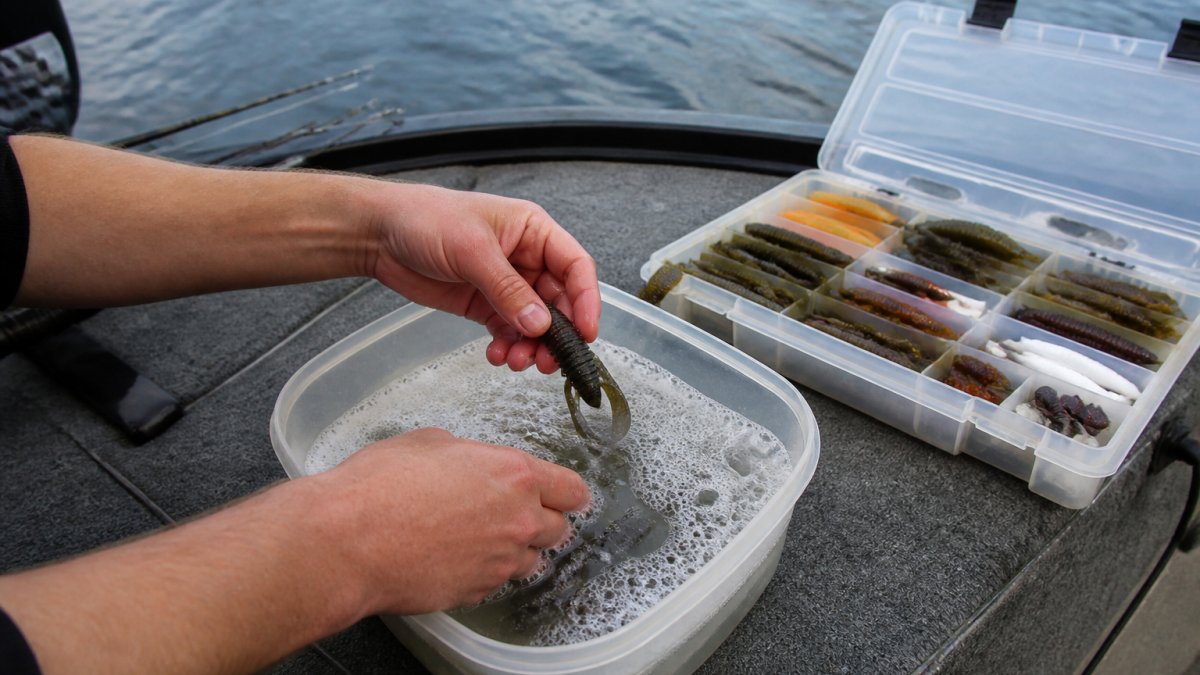
Step 1: Rinse Off Loose Residue
Start with cool water and a quick scrub. This lifts loose grounds, dust, and surface grime before they spread.
- Hold each lure under running water for 10 to 15 seconds
- Rub the surface with your thumb to break up caked grounds
- Shake off excess water and set aside
Do not use hot water here. Heat can soften some plastics and push oil deeper into the material. For wood lures, skip the running-water rinse and use a barely damp cloth instead, as covered in the material section below. Gentle handling also protects the bait itself; see this guide on care for soft plastics.
Step 2: Wash With Dish Soap
Fill a tub with warm water, roughly 90 to 100°F, comfortable but not steaming, and add a few drops of plain, unscented dish soap.
- Submerge each lure and let it sit for two to three minutes
- Work the soapy water into textured tails and jointed sections
- Use the soft brush on hard baits and hook hangers
Dish soap is the workhorse here: it breaks the surface tension that holds coffee oil to plastic. Change the wash water when it looks cloudy or feels slick; dirty water redeposits the oil you just lifted.
Step 3: Soak in Baking Soda
Baking soda neutralizes odor rather than just covering it (Arm & Hammer on how baking soda absorbs odors). Make a paste or a soak bath.
- For a bath: one tablespoon of baking soda per quart of warm water
- For a paste: three parts baking soda to one part water
- Soak soft baits for 15 to 20 minutes, or coat hard baits with paste and let sit 10 minutes
Rinse the paste off thoroughly; leftover powder dries into a chalky film. If the coffee smell is still noticeable after the first soak and a full dry, repeat the soap wash and baking soda soak once. Two rounds handle most cases; if a third is needed, the oil has penetrated too deep and the bait is a candidate for re-scenting rather than further cleaning.
Step 4: Rinse and Air-Dry Completely
Rinse every lure in clean, cool water until it no longer feels slick or chalky. Then let it dry fully, 12 to 24 hours with good airflow, before it goes back in the box. Lay soft plastics flat; hang or rack hard baits so water drains from the hook hangers.
| Step | What It Does | Time | Watch For |
|---|---|---|---|
| Rinse | Lifts loose grounds | 10-15 sec per lure | Skip hot water; use a damp cloth on wood |
| Dish soap wash | Breaks down oil | 2-3 min soak | Use unscented soap; change dirty water |
| Baking soda soak | Neutralizes odor | 15-20 min soft baits; 10 min paste on hard baits | Rinse paste fully; repeat once if needed |
| Air-dry | Stops mildew and odor | 12-24 hrs | Full airflow; flat surface for soft plastics |
How to Remove Odor From Soft Plastic Baits
Soft plastics are the hardest case because they absorb oil into the material itself, not just the surface, but most handle a baking soda soak without damage.
- Test one bait first. Soak a single worm or creature bait before committing a whole pack.
- Keep water warm, not hot. Heat warps tails and dulls colors.
- Skip solvents. Harsh cleaners can melt or harden soft plastics.
- Use baking soda, not bleach. Bleach attacks the plastic and leaves its own smell.
Scented plastics are a special case: cleaning strips the built-in scent layer too. That is fine if you plan to re-scent it yourself; a cleaned bait is a blank slate, not a restored one.
Let soft baits dry on a flat, non-porous surface. Hanging them can stretch the tails.
Cleaning Coffee Residue Off Fishing Lures: Material-Specific Guidance
Different lure materials need different handling; treat them all the same and you risk ruining the finish or the action.
- Soft plastics (worms, creature baits, swimbaits): baking soda soak for 15 to 20 minutes in warm, not hot, water, cool rinse, air-dry flat. Avoid scrubbing, which tears tails and dulls color.
- Hard plastic baits (crankbaits, jerkbaits, lipless): dish soap wash plus a soft brush. Baking soda paste is safe on the body but keep it out of jointed sections and line ties, where powder can pack in and gum up the action. Rinse twice and dry immediately to protect the finish.
- Metal spoons and blades: soap and water, then dry immediately to stop water spots. Avoid abrasive pads, which scratch the finish and give coffee oil a place to hide.
- Wooden lures: wipe, do not soak. Water swells wood and cracks the finish. Use a barely damp cloth with a drop of dish soap, wipe along the grain, and dry right away. A dry baking soda dusting left on for a few minutes and brushed off is the safer odor option.
- Scented or painted finishes: spot-test first on a hidden area. Some paints lift with scrubbing, and built-in scents can be stripped along with the coffee smell.
- Skirts: these trap oil in the strands. Swish in soapy water for 30 seconds, rinse, and hang to dry. Do not soak longer than a minute or two, or the skirt can lose its flare.
- Hooks and split rings: wipe with soapy water and dry immediately and separately. Coffee oil on hooks is a minor issue, but rust is not.
The golden rule: the more porous the material, the gentler the method. When in doubt, use less water, less heat, and a shorter soak.
Removing Odor vs. Masking It: What Actually Works
Removal means stripping the coffee oil out with soap, baking soda, and water, so the lure ends up neutral. Masking means covering the coffee smell with a stronger scent, like garlic or anise.
- Masking works in a pinch, but the coffee smell is still underneath and can come back as the cover scent fades.
- Removal takes more time, but you start fresh and can add whatever scent you actually want.
- Combining them is the best of both: strip the oil first, then apply your chosen scent to a clean surface.
If your goal is a neutral bait you can customize, remove first. If you just need to get through a trip, mask it.
How to Remove Smell From a Tackle Box
A tackle box holds odor the way a sponge holds water. Foam inserts, fabric liners, and rubber trays all trap coffee oil and scent.
- Empty everything out and set lures aside for cleaning.
- Remove foam and fabric liners if they come out.
- Wipe hard surfaces with a dish soap solution.
- Sprinkle baking soda in the bottom and let it sit overnight.
- Vacuum or wipe out the powder the next day.
- Wash fabric liners in the sink with mild soap and air-dry fully.
For deep-set odor, a small open dish of baking soda left inside the closed box for a few days pulls scent out over time. Replace it when it clumps.
Common Mistakes and How to Avoid Scent Transfer
- Using hot water. It softens plastics and drives coffee oil deeper. Keep it warm, not steaming.
- Grabbing scented soap. You trade one off-scent for another. Use plain, unscented dish soap.
- Storing lures damp. Trapped moisture breeds mildew, which adds its own smell. Dry for a full 12 to 24 hours.
- Cleaning lures but not the box. A coffee-soaked tray will re-scent clean baits. Clean both together.
- Handling baits right after your morning cup. Coffee oil on your fingers transfers straight to the lure. Rinse your hands, or keep coffee and tackle on opposite sides of the boat.
- Loose storage. Separate zip-top bags keep one smelly bait from tainting the rest.
Reel Good Coffee roasts small-batch blends for anglers, with free U.S. shipping on coffee. We make a donation to a Veterans Service Organization, like K9s For Warriors, for every sale made.
Frequently Asked Questions
How do you remove coffee smell from fishing lures?
Rinse the lure to clear loose grounds, wash it with a few drops of unscented dish soap, then soak it in a baking soda and water solution for 15 to 20 minutes. Rinse again and air-dry fully before storing. For soft plastics, skip harsh scrubbing so the plastic keeps its shape and action.
Can coffee oils damage soft plastic fishing lures?
Coffee oils can leave a sticky film on soft plastics that traps dirt and scent. Clean soft baits soon after exposure with mild dish soap and a short baking soda soak, and store them dry and separated so residue does not spread to other lures.
Will dish soap remove coffee residue from a lure?
Dish soap lifts most surface coffee residue and oils, especially with a small amount of unscented soap and warm water. Work it into the body and tail, rinse thoroughly, and follow with a baking soda soak if the smell lingers.
How do you remove coffee smell from a tackle box?
Empty the box, wipe the interior with mild soapy water, then sprinkle baking soda in the bottom overnight and wipe it out. For stubborn odor, leave a small open dish of baking soda inside the closed box for a few days. Make sure everything is fully dry before reloading.
Keep your coffee in the mug and off your lures. When you want a cup worth the early launch, our small-batch blends are made for mornings on the water.