

Last Updated: November 2, 2026
Quick Summary
A camping coffee percolator cycles boiling water through the grounds repeatedly for strong, hot coffee that serves a group, while a French press steeps coarse grounds for about 4 minutes, giving you more control over strength, a fuller-bodied cup, and easier cleanup for solo trips or small groups.
- Percolators brew in 5-10 minutes, hold heat well, and serve 6-12 people per batch.
- French presses steep in about 4 minutes and many weigh only 12-16 ounces.
- French press cleanup is easier: dump the grounds and rinse.
- Stainless steel percolators survive drops; glass French presses break on rocks.
- French press coffee is fuller and more textured; percolator coffee is strong, hot, and turns bitter if over-brewed.
Table of Contents
- Camping Coffee Percolator vs French Press: Quick Comparison
- How Each Brewing Method Works
- Percolator Coffee Brewing Time and Heat Control
- How to Make French Press Coffee Camping
- Taste, Strength, and Coffee Quality
- Best Coffee for Percolator and French Press Brewing
- Easy-to-Clean Camping Coffee Maker: Cleanup and Grounds Disposal
- Portability, Weight, and Durability for Camping
- Frequently Asked Questions
Camping Coffee Percolator vs French Press: Quick Comparison
When deciding between a camping coffee percolator vs French press, consider what matters most: brewing speed for a crowd, flavor control, durability, or ease of cleanup. Both work outdoors but deliver different results, and the right pick shapes your whole morning before you hit the water.
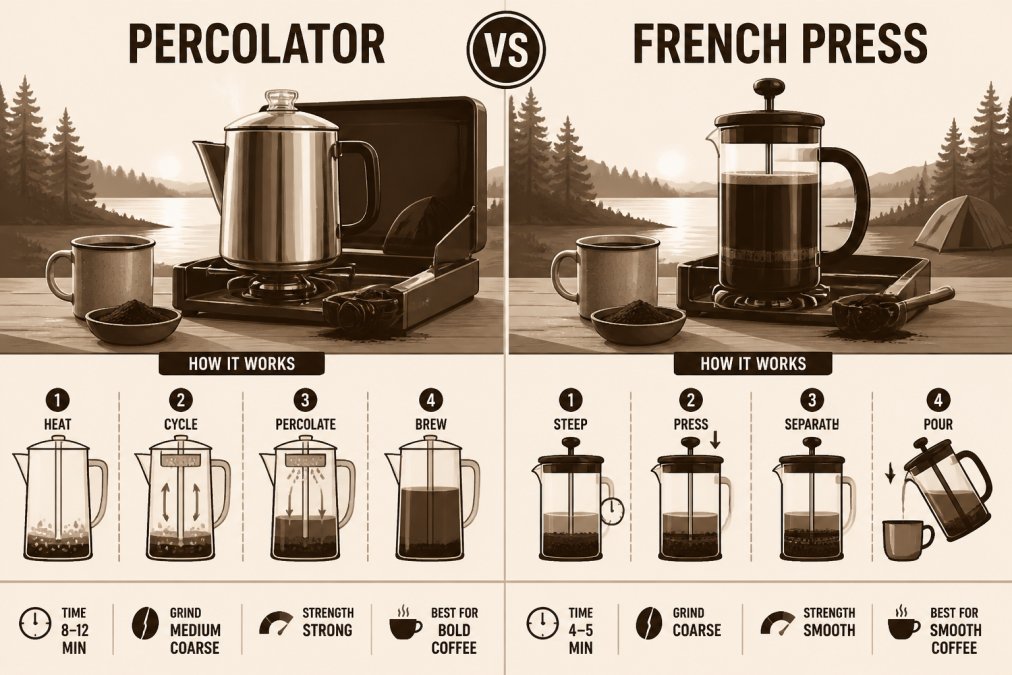
A percolator cycles hot water through ground coffee repeatedly, delivering strong, hot coffee for a group. A French press steeps coarse grounds in hot water, then uses a plunger to separate them.
| Feature | Percolator | French Press | Edge |
|---|---|---|---|
| Brew Time | 5-10 minutes | About 4 minutes steeping | French Press |
| Heat Retention | Excellent | Fair | Percolator |
| Flavor Control | Limited | High | French Press |
| Cleanup | Moderate (basket, stem, wet grounds) | Easy (dump and rinse) | French Press |
| Durability | Very durable (steel) | Fragile if glass | Percolator |
| Group Capacity | 6-12 servings | 2-8 servings | Percolator |
| Portability | Bulky | Compact | French Press |
How Each Brewing Method Works
Both methods rely on hot water and ground coffee, but the mechanics differ. For more outdoor options, see how to make coffee on a boat.
The Percolator Process
A percolator pushes boiling water up a center tube and sprays it over a basket of grounds, then lets it drip back down and repeats. Fill the lower chamber with water, add medium-coarse grounds to the basket, and heat over a flame or camp stove.
The repeated cycling extracts flavor aggressively, so over-extraction happens easily: coffee that perks too long turns bitter and harsh. When the coffee in the glass knob looks rich and the perking has run 5 to 8 minutes, pull it off the heat.
Percolators excel at holding heat. The metal pot keeps coffee hot for a long time, which matters when feeding a group or pouring second cups.
The French Press Process
A French press steeps ground coffee in hot water, then a mesh plunger pushes the grounds to the bottom. Add coarse grounds to the pot, pour hot water over them, set the lid on without pressing, wait about 4 minutes, then press slowly.
Water just off the boil works best, roughly 195-205°F. Steeping is forgiving: you control the time, so a slightly longer steep gives a stronger cup.
The trade-off: French presses don't hold heat as well. Once you press and pour, the remaining coffee cools faster than in a percolator, so groups may need multiple batches.
Percolator Coffee Brewing Time and Heat Control
On a camp stove or over a fire, expect 5-10 minutes from cold water to drinkable coffee: the first few minutes heat the water, the rest cycles it through the grounds.
Heat control is critical. Once it starts perking, turn the flame down to a gentle, steady perk. A hard, rolling boil over-extracts and scorches the flavor; too little heat stalls the cycle and drags brewing past 15 minutes.
One batch can serve 6-12 people, so you're not repeatedly reheating water. If you're camping with a crowd, a percolator saves fuel over multiple French press rounds.
How to Make French Press Coffee Camping
- Bring water to a boil and measure coarse grounds while it heats (about 1 part coffee to 15 parts water).
- Take the water off the heat and let it sit 30 seconds.
- Pour it over the grounds, making sure they're all wet, and set the lid on without pressing.
- Steep about 4 minutes.
- Press the plunger down slowly, over about 20-30 seconds.
- Pour right away. Coffee left sitting on the grounds keeps extracting and turns bitter.
The whole process takes about 5-6 minutes from boiling water to cup, which makes it a great quiet ritual before heading out. Many French presses weigh 12-16 ounces and pack small. For another lightweight option, see pour over coffee while camping.
Taste, Strength, and Coffee Quality
Immersion steeping pulls oils and fine particles into the cup, so French press coffee tastes fuller, richer, and more textured. Percolator coffee is strong, hot, and straightforward, but repeated cycling can push it into bitter territory if it perks too long.
Neither is "better." Brew strength is simply easier to control in a French press: adjust the steep time and you dial in exactly what you want. With a percolator, timing and flame are everything.
A bold roast does well in both. Barracuda Bold (French Roast), our dark roast of specialty-grade Central American coffees, keeps its deep, full-bodied character whether it's cycling through a percolator or steeping in a French press.

Best Coffee for Percolator and French Press Brewing
Dark and medium roasts both work in either method. For percolators, darker roasts like Barracuda Bold stand up to the aggressive extraction. For French presses, medium roasts let more of the coffee's character come through.
Grind size matters for both. Percolators need medium-coarse grounds; finer grounds slip through the basket and make the coffee gritty. French presses need coarse grounds, similar to sea salt.
Brewing for a group before dawn? BLAST FISHING (Breakfast Blend +) is a smooth medium breakfast blend made with robusta.
Easy-to-Clean Camping Coffee Maker: Cleanup and Grounds Disposal
French presses are genuinely easier to clean: dump the wet grounds into your trash bag, rinse the pot, done.
Percolators take more work. You have to lift out the hot basket and stem, knock out packed wet grounds, and rinse grounds out of the basket holes and tube. Let it cool first so you don't burn your hands.
If you're camping with limited water, French presses win again: rinsing a press uses less water than scrubbing a percolator basket. Pack out your grounds wherever leave-no-trace rules apply.
Portability, Weight, and Durability for Camping
A stainless steel percolator weighs 1-2 pounds and takes up real pack space, which is fine for car camping but heavy for backpacking. French presses are lighter and more compact, and some nest inside other cookware.
Durability is the percolator's big win. Steel shrugs off drops and rough handling, while a glass French press breaks on the first rock. If you go the French press route, a stainless or plastic model is the safer camping pick.
Cold, windy weather cools a French press quickly, so pour right away. A percolator keeps coffee hot on the stove or coals.
Pair your brewer with a rugged cup. The Enamel Mug - "Reel Good" Fishing Camp Coffee Cup is a lightweight 12 oz stainless steel mug with an enamel finish that resists rust and staining.

Choosing between a percolator and a French press comes down to your camping style. Camping with a group and want hot coffee that lasts? A percolator wins. Solo or with a partner and want control over flavor with easy cleanup? Go French press.
Reel Good Coffee's small-batch blends work in both, and coffee ships free in the U.S. We make a donation to a Veterans Service Organization, like K9s For Warriors, for every sale made.
Frequently Asked Questions
Can you use a French press while camping?
Yes. You just need boiling water from a camp stove, campfire, or portable burner. The main concern is breakage, so choose a stainless steel or plastic model or pack a glass one carefully. Steeping takes about 4 minutes, and cleanup is simple.
Which makes better coffee for camping: a percolator or a French press?
It depends on your priorities. Percolators make a big batch of strong, hot coffee and hold heat well, which suits group camping. French presses give you more control over strength and a fuller-bodied cup, which suits smaller groups. Barracuda Bold and Blast Fishing both work well in either method.
What type of coffee is best for a percolator?
Use medium-coarse grounds so they stay in the basket and don't make the coffee gritty. Darker roasts like Barracuda Bold hold up well to the repeated cycling. Start with about 1 part coffee to 15 parts water and adjust to taste.
Is a percolator or French press easier to clean at a campsite?
A French press is easier: dump the grounds and rinse. A percolator has a basket, stem, and tube to clean, and it takes more water to get grounds out of the basket. If water is limited, the French press is the better pick.
How long should you brew coffee in a camping French press?
About 4 minutes. Use water just off the boil (let boiling water sit 30 seconds), then press the plunger down slowly over 20-30 seconds. Under 3 minutes tends to taste weak; over 5 minutes risks bitterness.